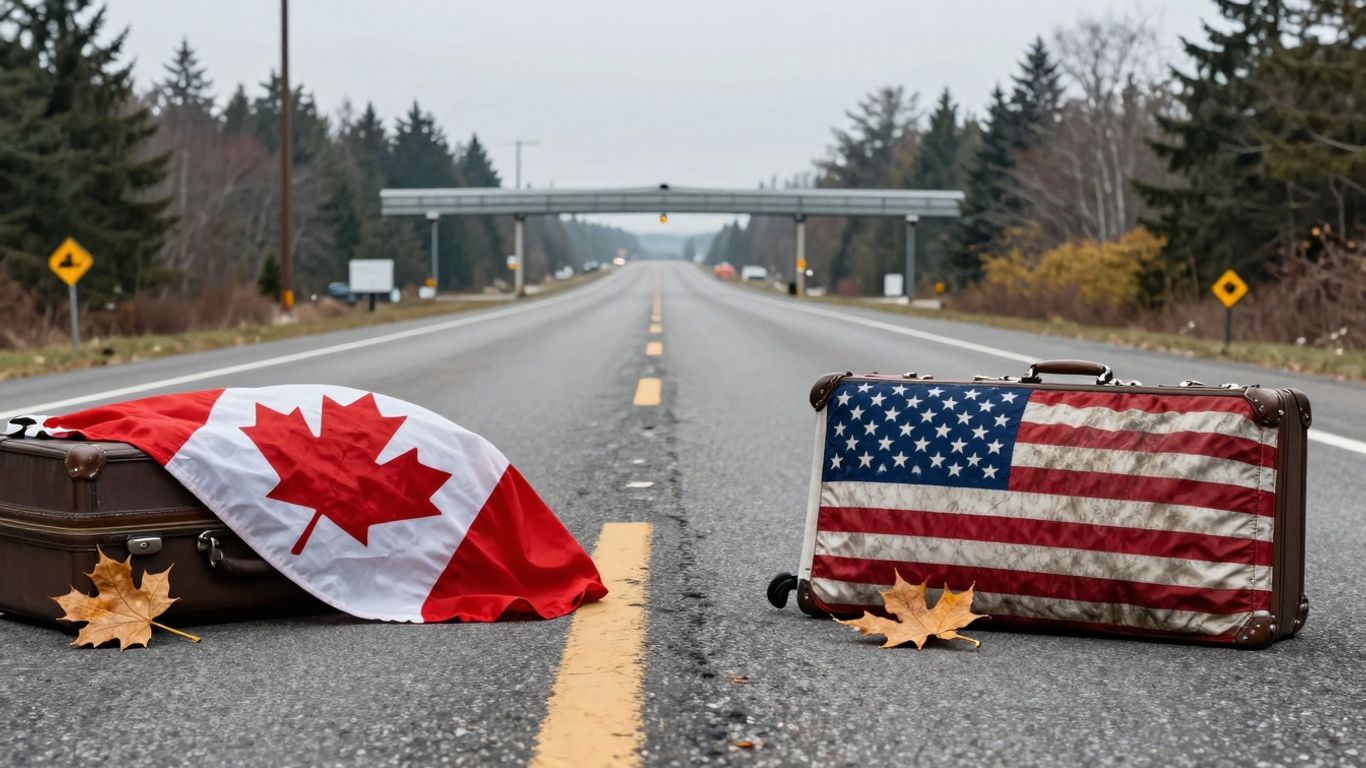
Drop in Canadian tourism? It feels like something’s shifted, doesn’t it? Lately, there’s been a noticeable quiet along the U.S. border towns. You know, the ones that usually buzz with activity from our neighbors up north. Turns out, Canadian tourism to the United States isn’t what it used to be. This isn’t just a small blip; it’s a trend that’s making waves, and businesses are definitely feeling the pinch. We’re talking about a real drop in visitors, and it’s got a lot of people wondering why and what it means for the future.
Key Takeaways
- U.S. border states are seeing a significant drop in Canadian visitors, leading to fewer tourists, more empty hotel rooms, and lower sales for local businesses.
- Factors like U.S. tariffs, political tensions, and a weaker Canadian dollar are making trips to the United States less appealing for Canadians.
- Specific states like New Hampshire, Maine, Montana, and Washington are reporting substantial decreases in Canadian tourist numbers.
- Historically, Canadians have been a major source of international tourism and spending for the U.S., making this downturn particularly impactful.
- Business owners in border communities are sharing stories of reduced sales and expressing concerns about the long-term effects of this decline in Canadian tourism to the United States.
Economic Repercussions For U.S. Border States
Declining Tourist Numbers Impacting Local Businesses
It’s not just a few isolated incidents; the numbers are really starting to show a trend. Businesses all along the northern border are feeling the pinch. Think about it: fewer Canadian visitors mean fewer people walking through the doors of shops, restaurants, and attractions. This isn’t just about a small dip; it’s a noticeable slowdown that’s making owners sweat.
Hotel Vacancies and Reduced Sales Plague Border Towns
Hotels in towns that used to be bustling with Canadian tourists are now seeing empty rooms. This isn’t just inconvenient; it directly hits the bottom line. When hotels have more vacancies, it means less revenue. And it’s not just hotels. Retailers are reporting fewer sales, and restaurants are serving fewer tables. It’s a tough situation for these communities that have come to rely on that cross-border traffic.
Loss of Revenue for Retail and Hospitality Sectors
The impact is widespread. The retail and hospitality industries are particularly vulnerable. These are the sectors that directly benefit from tourists spending their money. With fewer Canadians crossing the border, these businesses are experiencing a significant drop in income. It’s a direct hit to the local economy, affecting jobs and the overall financial health of these border towns.
The economic fallout from the decline in Canadian tourism is a serious concern for U.S. border states. This downturn affects not only businesses directly serving tourists but also the broader economic ecosystem of these regions. The ripple effect is felt in job security and local investment.
Here’s a look at how some areas are being affected:
- New Hampshire: Reports indicate a substantial drop in Canadian visitors, impacting small businesses that depend on them.
- Maine: The state’s tourism sector is feeling the strain, with fewer Canadians choosing to visit.
- Montana: This state has a notable reliance on Canadian visitors, making the current decline particularly challenging.
- Washington State: Reduced cross-border traffic from Canada is leading to a noticeable slowdown in tourism-related activities.
This situation has been exacerbated by recent political and economic factors. For instance, the report from the Democrat minority of the U.S. Congress’s joint economic committee highlights how actions like “Trump halts trade talks” have negatively influenced cross-border travel. The joint economic committee, set up in 1946, is meant to study economic policy, and its findings in this case point to a clear economic consequence for border states. The committee’s analysis shows a nearly 20 percent decline in passenger vehicle crossings from January to October 2025 compared to the previous year, with some states seeing drops of over 27 percent.
Factors Influencing Canadian Travel Decisions
Impact of U.S. Tariffs and Political Tensions
It’s not just about the price of gas or a hotel room anymore. There’s a definite chill in the air when it comes to Canadians heading south. Many folks are feeling frustrated by the uncertainty surrounding the threat of 25 per cent tariffs on Canadian goods. This, combined with some pretty strong political talk from the U.S. side, has made a lot of people rethink their travel plans. It feels like more than just a trade dispute; it’s created a bit of an awkwardness that makes hopping across the border for a weekend shopping trip or a family visit feel less appealing.
The Role of a Weaker Canadian Dollar
Let’s talk money. The Canadian dollar hasn’t been doing so hot compared to the U.S. dollar lately. This means everything in the States costs more for Canadians. Think about it: a $100 purchase in the U.S. could easily cost you $135 or more in Canadian funds, depending on the exchange rate. That adds up fast, especially if you’re planning a longer trip or a big shopping spree. It makes you pause and consider if the trip is really worth it when your money doesn’t stretch as far.
Here’s a quick look at how the exchange rate can affect your spending:
| U.S. Dollar Amount | Canadian Dollar Cost (Approx. at 0.75 CAD/USD) |
|---|---|
| $50 | $66.67 |
| $100 | $133.33 |
| $500 | $666.67 |
Shifting Travel Preferences Towards Domestic or Alternative Destinations
Because of the higher costs and the general political climate, Canadians are looking closer to home or exploring different international spots. Instead of driving down to Seattle or flying to Florida, many are opting for trips within Canada. Think exploring the Rockies, visiting Quebec City, or hitting up the Maritimes. Others are looking at destinations outside of North America that might offer better value or a different kind of experience. It seems like people are building new traditions and making new memories closer to home, and it’s taking time to get them back.
The combination of economic factors and political friction has created a perfect storm, pushing Canadians to reconsider their usual travel patterns. It’s a noticeable shift away from the long-standing habit of crossing the border for leisure and shopping.
Specific State Impacts on Canadian Tourism
It’s not just a general trend; specific states are really feeling the pinch when it comes to Canadian visitors. You know, the ones who used to pop down for a weekend shopping trip or a longer vacation. U.S. tourism faces $5.7B US loss as Canadians continue to stay home, and that’s hitting some places harder than others.
New Hampshire Experiences Significant Visitor Drop
Northern New Hampshire, being so close to the border, usually sees a good chunk of Canadian tourists. We’re talking maybe 15% to 25% of their visitors. But now? Some shop owners say they can practically count the Canadian visitors on one hand. It’s tough out there for small businesses trying to keep afloat.
Maine’s Tourism Sector Feels the Pinch
Maine’s tourism numbers are definitely down. Passenger car crossings from Canada dropped by about 25% in the first ten months of the year. Even the ferry service connecting Bar Harbor to Nova Scotia saw a 20% dip in business over the summer. One business owner in Old Orchard Beach called it the worst year they’ve had, even worse than during COVID, with a reported 50% drop in visitors.
Montana’s Reliance on Canadian Visitors
Montana is another state that really counts on its Canadian neighbors. Before, Canadians made up almost 80% of the international visitors, bringing in a good chunk of money. But border crossings have fallen, and one hotel even lost $38,000 when a Canadian sports team canceled a big reservation. Businesses there noticed a big drop in travel and spending by Canadians.
Washington State Sees Reduced Cross-Border Traffic
Out on the West Coast, Washington State is also seeing fewer Canadians. Passenger vehicles crossing the border are down significantly, and cities like Spokane have reported a 33% drop in visitors. It’s a clear sign that the usual flow of cross-border traffic has really slowed down.
The absence of Canadian visitors isn’t just about fewer people crossing the border; it means less money spent in local shops, fewer rooms booked in hotels, and a general slowdown for businesses that have come to rely on this steady stream of international customers. It’s a real economic hit for these communities.
Here’s a quick look at some of the numbers:
| State | Passenger Vehicle Decline (Approx.) | Notes |
|---|---|---|
| Maine | 25% | CAT Ferry business down 20% |
| Montana | 19% | Significant reliance on Canadian visitors for international tourism |
| Washington | 24% | Spokane reports 33% visitor drop |
Historical Significance of Canadian Visitors
Canadians as Key International Tourists for the U.S.
For decades, Canadians have been a cornerstone of international tourism for the United States. It wasn’t just about numbers; it was about a consistent, reliable flow of visitors who often came for extended stays and spent generously. Think about it: many Americans have family or friends up north, and vice-versa. This created a natural, ongoing connection that translated directly into tourism dollars for states bordering Canada. They weren’t just tourists; they were often repeat visitors, familiar with the local spots and eager to return.
Long-Standing Traditions of Cross-Border Travel
Cross-border travel between Canada and the U.S. is practically a tradition. Generations of Canadians have made annual trips south for everything from shopping trips to major holidays, or just to visit relatives. This wasn’t a new trend; it was deeply ingrained. Many border towns, especially in states like New Hampshire, Maine, and Washington, built their economies around this predictable influx of Canadian visitors. It was a comfortable, established pattern.
Economic Contributions of Canadian Spending
Canadians have historically been among the most significant international spenders in the U.S. Their contributions weren’t limited to just one sector. They supported hotels, restaurants, retail stores, and attractions across the northern tier of states. The economic impact was substantial, providing jobs and revenue that were vital for many communities. Losing this consistent spending power has a real, tangible effect on these local economies.
The relationship between Canadian tourists and U.S. border economies is long-standing and mutually beneficial. It’s built on familiarity, shared interests, and a history of easy travel. Disrupting this flow has immediate and noticeable consequences for businesses that have come to rely on it.
Here’s a look at how important Canadian visitors have been:
- Shopping Excursions: Many Canadians would cross the border for retail therapy, taking advantage of U.S. prices and selection.
- Family Visits: A significant portion of travel was to visit family and friends, leading to longer stays and more local spending.
- Vacation Destinations: Popular spots in states like New York, Vermont, and Washington have long been favored vacation spots for Canadians.
This established pattern of travel and spending has been a steady economic engine for years. The recent downturn, influenced by factors like tariffs and political rhetoric, including comments like Trump’s comments about annexing Canada, has disrupted this long-standing relationship, leaving many businesses feeling the pinch.
Analysis of Border Crossing Data
Looking at the numbers really paints a clear picture of what’s happening. It’s not just a feeling; the data shows a significant drop in Canadians coming over the border. Passenger vehicle crossings have seen a steep decline, which makes sense when you think about how many Canadians used to just pop over for a day trip or a weekend.
Passenger Vehicle Crossings Show Steep Decline
According to analysis from the Joint Economic Committee, from January to October of 2025, the number of passenger vehicles crossing the U.S.-Canada border fell by nearly 20% compared to the same period in 2024. Some states, particularly those right on the border, experienced even larger drops, with declines reaching up to 27%. This isn’t just a small dip; it’s a noticeable change that businesses are feeling directly.
| Border State | Decline in Passenger Vehicle Crossings (Jan-Oct 2025 vs 2024) | Notes |
|---|---|---|
| Overall U.S.-Canada | ~20% | Based on Joint Economic Committee analysis |
| Specific States | Up to 27% | Varies by state, with border regions most affected |
Air Travel from Canada to the U.S. Decreases
It’s not just cars on the road, either. While the data is still being fully compiled, early reports suggest that air travel from Canada to the U.S. has also seen a decrease. This impacts not only border towns but also cities further south that rely on Canadian visitors for a significant portion of their tourism revenue. Fewer flights mean fewer tourists overall, affecting everything from hotel bookings to attraction ticket sales.
Data Highlighting the Extent of the Tourism Slump
These statistics are more than just figures; they represent real economic impact. For communities that have long depended on cross-border shoppers and vacationers, this downturn means less money circulating in local economies. Think about it: fewer visitors mean fewer meals eaten at restaurants, fewer nights spent in hotels, and less money spent in shops. It’s a ripple effect that touches many different types of businesses.
The decline in border crossings isn’t just a statistic; it’s a direct reflection of fewer dollars spent in American communities. Local businesses, from small gift shops to larger hotels, are feeling the absence of Canadian customers acutely. This trend suggests a significant shift in travel patterns that could have lasting effects if not addressed.
Here’s a quick look at what the numbers suggest:
- A nearly 20% drop in passenger vehicle crossings between January and October 2025 compared to the previous year due to drop in Canadian tourism.
- Some border states seeing declines as high as 27% in vehicle traffic.
- Indications of a decrease in air travel from Canada, though specific figures are still emerging.
- These trends correlate directly with reports of reduced sales and increased hotel vacancies in border towns.
Business Owner Perspectives on the Downturn
Testimonials from Affected Retailers
It’s not just a headline anymore; for many small businesses along the northern border, the drop in Canadian visitors is a stark reality. “The friction at the border is no longer just a headline; it is an empty parking lot and a threat to our livelihood,” shared Kyle Daley, owner of Soloman’s Store in West Stewartstown, New Hampshire. He noted that the usual summer rush of vacationers simply didn’t materialize this year. This sentiment is echoed by Moshe Agam, a business owner in Old Orchard Beach, Maine, who described this past year as the worst he’s ever seen, even worse than during the pandemic. He reported a staggering 50% drop in business, directly attributing it to the lack of Canadian tourists.
Impact on Restaurants and Entertainment Venues
The ripple effect is hitting restaurants and entertainment spots hard too. Kevin Coleman, executive director of SeaFeast in Bellingham, Washington, explained that since March, they’ve seen a drastic drop in Canadian traffic, which also led to fewer attendees at their late September festival. He mentioned that businesses couldn’t rely on Canadian customers anymore due to “fear at the border and lack of understanding of what is happening with tariffs.” This uncertainty, coupled with Canada’s “Canada First” promotion, has made planning and revenue projections incredibly difficult.
Concerns Over Long-Term Damage to Tourism Habits
Beyond the immediate financial hit, there’s a growing worry about lasting changes. Christa Bowdish of the Old Stagecoach Inn in Vermont, who had to reduce staff hours, expressed a deep concern that the damage might be permanent. “It’s not just the tariffs,” she stated, “This is long-lasting damage to a relationship and emotional damage takes time to heal.” The fear is that Canadians, forced to find new destinations, will develop new travel habits and loyalties, making it challenging to win back that business even if border relations improve. The question on many minds is not just when Canadians will return, but how much of that lost business can ever truly be recovered.
Here’s a look at some reported impacts:
- Staffing Reductions: In New York’s North Country, 83% of businesses reported a drop in Canadian customers due to drop in candian tourism, leading 35% to cut staff.
- Ferry Service Cuts: A ferry service connecting Vancouver Island and Seattle saw a 30% decrease in ridership, resulting in a quarter of its workforce being laid off.
- Event Cancellations: A Montana hotel lost $38,000 when a Canadian sports team canceled a reservation for 70 rooms and a 200-person dinner.
The current situation has created a difficult environment for businesses that have long depended on cross-border shoppers and visitors. The uncertainty surrounding trade policies and the overall political climate has created a hesitance among Canadian travelers, leading to noticeable declines in foot traffic and sales for many establishments.
Looking Ahead
So, it’s pretty clear that fewer Canadians are heading south for visits these days. This isn’t just a small blip; it’s really affecting businesses all along the U.S. northern border. From shops to hotels, the drop in Canadian tourists means less money coming in, and that’s a tough situation for a lot of folks. It’s going to take time to see if things get back to how they were, and some worry that the damage might stick around for a while, even if relations improve. For now, many American towns that relied on those Canadian dollars are feeling the pinch, and it’s a situation worth keeping an eye on.
Frequently Asked Questions
Why are fewer Canadians visiting the United States?
Several things are making Canadians visit the U.S. less. The U.S. has put tariffs on Canadian goods, and there have been some disagreements between the two countries. Also, the Canadian dollar isn’t worth as much compared to the U.S. dollar, making trips more expensive. Some Canadians are also choosing to visit places in Canada or other countries instead.
Which U.S. states are most affected by the drop in Canadian tourism?
States right along the border with Canada are feeling the biggest impact. This includes states like Washington, Montana, New Hampshire, and Maine. Businesses in these areas often rely a lot on Canadian shoppers and visitors.
How are businesses in border towns being affected?
Businesses like shops, restaurants, and hotels are seeing fewer customers. This means they are making less money. Some hotels have more empty rooms than usual, and stores are reporting lower sales because Canadian tourists aren’t buying as much.
How much money do Canadian tourists usually spend in the U.S.?
Canadians have historically been a huge part of international tourism in the U.S. They spend billions of dollars each year, supporting many jobs. Losing these visitors means a big loss in income for many American communities.
Are there specific examples of businesses feeling the pinch?
Yes, many business owners have shared their stories. For example, a gift shop owner in New Hampshire said she can now count Canadian visitors on just one hand, when usually they make up a big part of her customers. A hotel in Montana lost a large booking from a Canadian sports team.
Could this drop in Canadian tourism cause long-term problems?
Some business owners worry that if Canadians get used to visiting other places, they might not come back to the U.S. even if things get better between the two countries. It takes time to build new travel habits, and it could be hard to win back these visitors.


2 thoughts on “The drop in Canadian tourism to the US is good?”